  Professional Skills: Data Storytelling – 33310- JOUR 4401 – A Professional Skills: Data Storytelling – 33310- JOUR 4401 – A
School of Journalism and Communication
Fall 2020
Day: Wednesday
Time: 16:00-21:00
Location: usual location is room 1105 Richcraft Hall (the TV Newsroom),
but our sessions will be held virtually
Instructor: David McKiePhone Number: 1-613-288-6523 (office) 1-613-290-7380 (cell)
Email: davidmckiec@gmail.com
Teaching Assistant:
Yuhua Chen
Rebecca Bartlett & Meaghan Kenny
GIS and Digital Resources Librarians
Research Support Services
Carleton University Library
613-520-2600 x 1615
.
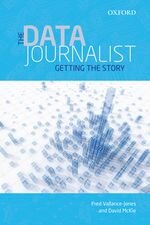
David and Fred are co-authors of
“The Data Journalist: Getting the Story“
You can also obtain a copy of The Data Journalist e-book. You’ll need a Kobo device or reader (reader available free for Android, iOS, Mac and PC).
Data journalism stories | What you will learn | Needs and Special Accommodations | Assignments and deadlines | Week one | Week two | Week three | Week four | Week five | Week six |Week seven | Week eight | Week nine | Week ten | Week eleven | Week twelve | Week thirteen | Assignment One | Assignment One |Assignment Two| Assignment Three |Readings | Additional Reading |Tutorials | Datasets | Additional Resources
COURSE DESCRIPTION
The goal of the Data Journalism Storytelling course is to teach students how to find and negotiate for data that is publicly available, or must be obtained formally or informally through a federal access-to-information, or provincial or municipal freedom-of-information request. We will analyse the records using the following: Excel; MySQL; DocumentCloud; Qgis; and ArcGISOnline;
Taken together, these tools are packaged into a discipline called data journalism. Our textbook is The Data Journalist: Getting the Story., which is available at the Carleton bookstore in hard copy for curbside pickup, or as ebooks.
At the end of this term, you will become adept at searching for information, perusing and downloading files from government open-data websites, recognizing patterns in data, analyzing the material for story ideas, or for questions that could lead to stories or background information for interviews.
As the course’s name suggests, there will be a heavy emphasis on storytelling, using words, maps, charts, video and sound. As such, we will emphasize stories that have appeared in the news, either as examples of how data journalism was used, or how it could or should have been used. These discussions and in-class exercises will help you develop new analytical and storytelling skills. Specially designed tutorials based on data used in this class, and tutorials from The Data Journalist will be used to hone your newly-learned skills.
The course will be comprised of three modules: spreadsheets (Excel); database managers (MySQL); mapping (Qgis and ArcGIS Online)
There will be three assignments ( please see chart below ). At the end of each segment, there will be an in-class tests worth five percent.
This is a professional school, and you’ll be held to professional standards in both assignments and conduct. As a student of journalism, you must read and adhere to the school’s policies:
- Our ethics policy sets out the rules of behaviour that you, as students and journalists, are expected to follow as you carry out your assignments for this course.
- Our publishing policy requires certain authorizations before journalistic coursework can be published outside of the class. In addition, your sources must understand that any assignments they are associated with may be published outside of class.
- Our policy on electronic media usage requires that you follow copyright regulations with respect to your use of all materials culled from the Internet.
Undergraduates can find all three policies on this page https://carleton.ca/sjc/journalism/undergraduate-studies/resources-current-undergraduate-students/
Graduates can find all three policies here https://carleton.ca/sjc/journalism/graduate-studies/resources-current-students/
You are expected to be familiar with these policies and apply them to your work. Failure to abide by them will adversely affect your standing in the course.
Requests for Academic Accommodation (TOP)
You may need special arrangements to meet your academic obligations during the term. For an accommodation request, the processes are as follows:
Pregnancy obligation
Please contact your instructor with any requests for academic accommodation during the first two weeks of class, or as soon as possible after the need for accommodation is known to exist. For more details, visit the Equity Services website: carleton.ca/equity/wp-content/uploads/Student-Guide-to-Academic-Accommodation.pdf
Religious obligation
Please contact your instructor with any requests for academic accommodation during the first two weeks of class, or as soon as possible after the need for accommodation is known to exist. For more details, visit the Equity Services website: carleton.ca/equity/wp-content/uploads/Student-Guide-to-Academic-Accommodation.pdf
Academic Accommodations for Students with Disabilities
If you have a documented disability requiring academic accommodations in this course, please contact the Paul Menton Centre for Students with Disabilities at 613-520-6608 or for a formal evaluation or contact your centre coordinator to send your instructor your letter of accommodation at the beginning of the term. You must also contact the Paul Menton Centre no later than two weeks before the first in-class scheduled test or exam requiring accommodation (if applicable). After requesting accommodation, meet with your instructor as soon as possible to ensure accommodation arrangements are made.
Survivors of Sexual Violence
As a community, Carleton University is committed to maintaining a positive learning, working and living environment where sexual violence will not be tolerated. Survivors are supported through academic accommodations as per Carleton’s Sexual Violence Policy. For more information about the services available at the university and to obtain information about sexual violence and/or support, visit: carleton.ca/sexual-violence-support
Accommodation for Student Activities
Carleton University recognizes the substantial benefits, both to the individual student and for the university, that result from a student participating in activities beyond the classroom experience. Reasonable accommodation must be provided to students who compete or perform at the national or international level. Please contact your instructor with any requests for academic accommodation during the first two weeks of class, or as soon as possible after the need for accommodation is known to exist. https://carleton.ca/senate/wp-content/uploads/Accommodation-for-Student-Activities-1.pdf
If you are an international or exchange student and need help in areas such as proofreading, please feel free to contact the International Student Services Office.
For more information on academic accommodation, please contact the departmental administrator or visit: students.carleton.ca/course-outline
WHAT YOU WILL LEARN (TOP)
1) How to use federal, provincial and municipal open-data web portals;
2) How to analyze statistics using a spreadsheet;
3) How to create a pivot table;
4) How to use advanced functions in Excel;
5) How to use technical skills such as exporting tables from PDFs into Excel;
6) How to use MySQL;
7) How to advance your numeracy skills;
8) How to use Tableau Public;
9) How to use Qgis , ArcGIS Online, and OpenStreetMap;
10) How to become effective storytellers.
Assignments and Deadlines (TOP)
Assignments in this course are governed by the provisions of the document Ethics and Standards in the School of Journalism and Communication. There are three assignments, each with a deadline. Lateness will be penalized with the deduction of a half a grade for every day the story is overdue, though exceptional circumstances will be taken into account. Assignments will be graded and returned with feedback within two weeks of submission.
Questions or appeals about your grade on assignments or other graded components of the course should be raised with the instructor no later than seven business days after the grade has been issued, as explained in the university’s academic regulations (2.7 and 2.8). Your final course grade is based on grades earned throughout the term on the assignments and other graded components listed in the syllabus. This means requests to raise an overall course grade at the end of the term or year cannot be considered.
Standing in a course is determined by the course instructor subject to the approval of the faculty dean. This means that grades submitted by an instructor may be subject to revision. No grades are final until they have been approved by the Dean.
There is no final examination. Each assignment has two components, all of which will figure in the grade:
A. A description of how the documents and data were obtained, why they were useful and how the material was analyzed
B. The resulting story
Academic Integrity
This course abides by Carleton University’s Academic Integrity Policy. Acts of academic dishonesty include, but are not restricted to, plagiarism and unauthorized resubmission of work, and will be dealt with accordingly. Plagiarism is a serious offence, which cannot be resolved directly between the student and the course instructor. If an academic offence is suspected, it will be referred to the office of the dean of the Faculty of Public Affairs. The associate dean of the faculty will conduct a rigorous investigation, including an interview with the student, when an instructor suspects a piece of work has been plagiarized. Penalties are not trivial. They can include a final grade of “F” for the course.
- Do not, under any circumstances, present someone else’s work as your own.
- Do not download and/or copy any files, stories, photos, audio or video you find online or elsewhere and use them as your own.
- Do not fabricate sources of information.
- Do not invent facts.
For undergraduates: Undergraduate Calendar section 12.0 Academic Integrity http://calendar.carleton.ca/undergrad/regulations/academicregulationsoftheuniversity/ or http://carleton.ca/senate/wp-content/uploads/Academic-Integrity-Policy1.pdf
For graduates: General Regulations, Section 19, of the Graduate Calendar http://calendar.carleton.ca/grad/gradregulations/
Assignments
|
Percent
|
|
| Assignment#1: A story using numbers crunched in Excel. Deadline: Midnight Sept. 30 |
15% |
|
| Assignment #2: A story using data analysed using MySQL. Deadline: Midnight Nov. 22 |
25% |
|
| Assignment #3: Mapping assignment. Deadline: Midnight Dec 10 |
35% |
|
| Three in-class tests. |
15% |
|
| Participation/professional conduct: For punctuality, informative in-class participation and professionalism displayed by actions such as prompt responses to emailed messages, and the prompt following up after emailed instructions regarding the use of certain software. |
10% |
|
GRADES
A+ 90-100 A 85-89 A- 80-84
B+ 77-79 B 73-76 B- 70-72
C+ 67-69 C 63-66 C- 60-62
D+ 57-59 D 53-56 D- 50-52
For undergraduates: The passing grade for this course is a grade of C
Questions or appeals about your grade on assignments or other graded components of the course should be raised with the instructor no later than seven business days after the grade has been issued, as explained in the university’s undergraduate calendar. Your final course grade is based on grades earned throughout the term on the assignments and other graded components listed in the syllabus. This means requests to raise an overall course grade at the end of the term or year cannot be considered.
Standing in a course is determined by the course instructor subject to the approval of the faculty dean. This means that grades submitted by an instructor may be subject to revision. No grades are final until they have been approved by the dean.
*******
For graduates: The passing grade for this course is a grade of B minus
Informal questions or appeals about your grade on assignments or other graded components of the course should be raised with the instructor no later than seven business days after the grade has been issued.
For information about the formal Grade Review process, please see the graduate regulations: http://calendar.carleton.ca/grad/gradregulations/administrationoftheregulations/#15
Standing in a course is determined by the course instructor subject to the approval of the Faculty Dean. This means that grades submitted by an instructor may be subject to revision. No grades are final until they have been approved by the Dean.
Ethics and Professional Standards
This is a professional school, and you’ll be held to professional standards in both assignments and conduct. As a student of journalism, you must read and adhere to the school’s policies.
- Our ethics policy sets out the rules of behaviour that you, as students and journalists, are expected to follow as you carry out your assignments for this course. One of the rules, for example, makes clear that you must not interview relatives or friends for your story, except in rare and special circumstances and with the advance permission of the instructor.
- Our publishing policy requires certain authorizations before journalistic coursework can be published outside of the class. In addition, your sources must understand that any assignments they are associated with may be published outside of class.
- Our policy on electronic media usage requires that you follow copyright regulations with respect to your use of all materials culled from the Internet. For example, you cannot use any pictures you find online in your assignments unless you get written permission from the copyright holder to use them and submit it to the instructor.
Undergraduates can find all three policies on this page https://carleton.ca/sjc/journalism/undergraduate-studies/resources-current-undergraduate-students/
Graduates can find all three policies here https://carleton.ca/sjc/journalism/graduate-studies/resources-current-students/
You are expected to be familiar with these policies and apply them to your work. Failure to abide by them will adversely affect your standing in the course.
Academic Advice
For undergraduates: If you have questions about the journalism program, degree requirements, your standing in the program or your academic audit, you should contact your Undergraduate Administrator Joan Thompson at or Undergraduate Supervisor Randy Boswell at
For graduates: If you have questions about the journalism program, degree requirements, your standing in the program or your academic audit, you should contact your Graduate Administrator Jena Lynde-Smith at or Graduate Supervisor Janice Tibbetts at
COMMUNICATIONS WITH STUDENTS
This will be done primarily through email correspondence and phone calls — especially during a pandemic — given that I do not have an office at Carleton University. The protocol will dictate that emailed queries will be answered as promptly as possible, if possible within the hour. As such, it will be important for you to regularly check your email account for updates regarding assignments, new datasets or class work. You’ll also be required to use your Carleton University account, not a second account such as gmail.
PROFESSIONALISM
We’ll conduct ourselves as professional journalists. That means attending class, showing up on time; being prepared and ready to make a meaningful contribution based on the preparation work you’ve been assigned; paying attention to your instructor and colleagues and ignoring email correspondence, Facebook, text messages, Twitter, Instagram, and promptly responding to emails from the instructor. You’ll also be expected to stay on top of current events, which is part of your obligation as a journalist.
If your absence is due to a medical reason, you may be required to provide a doctor’s note. If it’s for an internship, then you’ll have to provide details. You are expected to attend ALL classes. If personal reasons prevent you from attending a specific class, please let me know in advance via email.
REQUIRED SUPPORT RESOURCES
Because of the pandemic, the course will be taught online and synchronously, using Zoom. As the school possesses an ArcMap licence, we are be able to use the mapping software. We also use the open-source software, Qgis, and MySQL for our database work. You can use the licence that comes with your tuition to download the latest version of Microsoft Excel, a better option than Google Sheets.
The library’s Maps, Research Support Services is well positioned to provide support to faculties including journalism and communications.
Data Journalism Stories (TOP)
Examples stories using data journalism
CAJ Data Award Winners and finalists
Andreas Wesley, Anu Singh, Caitlin Taylor, Dan Taekema, David Common, Ellen Mauro, Jorge Barrera, Joseph Loiero, Sian Lloyd, Valerie Ouellet, David McKie
Peer-on-Peer Violence in Canadian Schools
CBC News
Inayat Singh, Naël Shiab, Romain Schué, Valérie Ouellet, Zach Dubinsky, Vincent Maisonneuve
Who’s behind Canada’s Most Active Airbnb Accounts?
CBC News / Radio-Canada – Investigative unit
Institute for Investigative Journalism and media partners
Tainted Water
IIJ / Toronto Star / Global News / Le Devoir / Regina Leader-Post / National Observer
Philippe Langlois, Sarah-Maude Lefebvre, Andrea Valéria
Combien gagnent vos élus?
Le Journal de Montréal – Bureau d’enquête
Bethanee Diamond, Ava Coulter, Ian Gibb, Piper MacDougall, Isabel Ruitenbeek, Julia-Simone Rutgers, Jane Sangster, Stacey Seward
Foreclosed
The Signal / University of King’s College, Halifax / The Coast / Pictou Advocate / Port Hawkesbury Reporter
Investintech — CAJ Data Journalism Scholarship
https://www.investintech.com/data-journalism-scholarship/winners/
Les églises converties du Québec
https://noradnargel.wixsite.com/monsite
2019 Philip Meyer Award winners
Winners announced
https://www.ire.org/archives/40165
First place: Hidden Injustice; How U.S. courts cover up deadly secrets
https://www.reuters.com/investigates/section/usa-courts-secrecy/
Reuters
Second place: Ahead of the Fire
https://www.azcentral.com/in-depth/news/local/arizona-wildfires/2019/07/22/wildfire-risks-more-than-500-spots-have-greater-hazard-than-paradise/1434502001/
The Arizona Republic and the USA TODAY Network
Third place: Forced Out: Measuring the scale of the conflict in South Sudan
https://interactive.aljazeera.com/aje/2019/south-sudan-forced-out/index.html
Al Jazeera, supported by Pulitzer Center on Crisis Reporting, African Defence Review and Code for Africa
Honourable mention: Heat and Health in American Cities
https://www.npr.org/2019/09/03/754044732/as-rising-heat-bakes-u-s-cities-the-poor-often-feel-it-most
NPR
Code Red: Baltimore’s Climate Divide
https://cnsmaryland.org/interactives/summer-2019/code-red/index.html
The Howard Center For Investigative Journalism and Capital News Service at the University Of Maryland with additional work done by WMAR TV and Wide Angle Youth Media
The Sigma Awards 2020 winners
https://datajournalism.com/awards
Student Examples
Harbour Rising
https://signalhfx.ca/harbour-rising/
The Signal / University of King’s College, Halifax
The Fish You (Don’t Know You) Eat
https://globalreportingprogram.org/fishmeal/
Oscar Beardmore-Gray, Melanie Woods, Annie Rueter, Ryan Patrick Jones, Abi Hayward, Rehmatullah Sheikh, Dustin Patar, Monique Rodrigues, Rithika Shenoy, Stephan Kroener Hao Luo, Jonathan Ventura, Sebastian Romero Torres, Yuxian Wang, Shumin Wei, Dandan Dong, Thomas Smith, Cameron Bullen, Caroline Graham, Vito Zou, Paige Dean
Global Reporting Program, University of British Columbia / NBC Nightly Films
Left in the Cold: Canada’s First Internment Camps
https://clars377.wixsite.com/ukraine
Mount Royal University / Calgary Journal
Trafficked
http://doc.journalism.ryerson.ca/trafficked/
Sarah Chew, Katie Swyers, Martha Currie, Stephanie Liu
RSJ Doc / Ryerson University
To Die For
https://drive.google.com/a/ryerson.ca/file/d/1tC5XHPPjgVwIGcZBUHBCBck6S2TSLwys/view?usp=sharing
Trevor Green, Katie Li, Vartan Bzdikian, Daniel Drigo
RSJ Doc / Ryerson University
Canvas is tracking your data. What is UBC doing with it?
https://www.ubyssey.ca/features/double-edged-sword/
Zak Vescera
RSJ Doc / Ryerson University
General Investigations
Medical Disorder, parts one and two (Toronto Star)
http://projects.thestar.com/doctor-discipline/
http://projects.thestar.com/doctor-discipline/part-2/index.html
http://projects.thestar.com/doctor-discipline/part-3/index.html
People have a right to ‘as much transparency as possible’ when it comes to doctors’ pasts, health minister says
https://www.thestar.com/news/medical-disorder/2018/05/03/people-have-a-right-to-as-much-transparency-as-possible-when-it-comes-to-doctors-pasts-health-minster-says.html
Rachel Browne (Vice News)
https://news.vice.com/en_ca/article/d35eyq/black-and-indigenous-people-are-overrepresented-in-canadas-weed-arrests
Jacques Marcoux and Katie Nicholson (CBC Manitoba)
https://newsinteractives.cbc.ca/longform-custom/deadly-force
Nael Shiab (L’Actualité)
http://lactualite.com/societe/2017/06/28/un-canada-sans-immigrants/
http://lactualite.com/societe/2018/01/23/philippe-couillard-vous-fait-il-perdre-ou-economiser-de-largent-notre-robot-journaliste-repond-a-vos-questions/
Canada’s Highest Paid CEO’s (The Globe and Mail)
https://www.theglobeandmail.com/report-on-business/careers/management/executive-compensation/table-canadas-top-100-highest-paid-ceos/article30131636/?from=30171589
To gain access to a running, up-to-date list of the latest data journalism stories, please click here.
General Examples
Walmart: Thousands of police calls. You paid the bill.
http://www.tampabay.com/projects/2016/public-safety/walmart-police
Census-related stories
Report reveals alarming — and growing — racialized income divide in GTA
https://www.thestar.com/news/gta/2019/05/06/report-reveals-alarming-and-growing-racialized-income-divide-in-gta.html
Could devastate Rohingya camps
http://fingfx.thomsonreuters.com/gfx/rngs/MYANMAR-ROHINGYA/010062VK4VN/index.html?utm_source=The+Den+Bulletin&utm_campaign=ac556dbf53-EMAIL_CAMPAIGN_2018_05_15&utm_medium=email&utm_term=0_01a9377b12-ac556dbf53-149972721
Is Canada ‘ripping us off’? Or is it the best U.S. trade partner?https://www.washingtonpost.com/graphics/2018/business/us-canada-trade-balance/?utm_term=.5d06e66050de
Stories about data journalism
In the dark: The cost of Canada’s data deficit
https://www.theglobeandmail.com/canada/article-in-the-dark-the-cost-of-canadas-data-deficit/
Divorce and marriage data crucial for understanding Canada’s public health, researchers argue
https://www.theglobeandmail.com/canada/article-divorce-and-marriage-data-crucial-for-understanding-canadas-public/
Health-care data in the cloud? Early adopter took a giant leap, and it paid off
https://www.theglobeandmail.com/business/article-health-care-data-in-the-cloud-early-adopter-took-a-giant-leap-and-it/
The data game: How information on everything from flight patterns to parking lots can reveal valuable clues about where the market is heading
https://www.theglobeandmail.com/investing/article-quandl-and-the-invasive-use-of-data/?intcmp=notifications
Morning Update: Canada’s firearm data gap; Trump’s new China trade threat
https://www.theglobeandmail.com/canada/article-morning-update-canadas-firearm-data-gap-trumps-new-china-trade/
Poor flood-risk maps, or none at all, are keeping Canadian communities in flood-prone areas
https://www.theglobeandmail.com/canada/article-poor-flood-risk-maps-or-none-at-all-are-keeping-canadian-communities/
Can digital government produce usable and useful data for non-expert users? Canada’s National Energy Board faced the challenge with data visualization
http://policyoptions.irpp.org/magazines/february-2019/data-visualization-government-can-empower-dialogue/
OUTLINE
Week One(TOP)
Sept. 9
What we will cover:
Introduction to the course
A discussion about open data
A discussion of COVID-19 data
An introduction to Statistics Canada tables
Filtering and sorting
LINKS:
Federal government research
https://www.canada.ca/en.html
Information about programs and information holdings
https://www.canada.ca/en/treasury-board-secretariat/services/access-information-privacy/access-information/information-about-programs-information-holdings/sources-federal-government-employee-information.html
A list of open-data portals
http://davidmckie.com/open-data-portals/
Download today’s data on the geographic distribution of COVID-19 cases worldwide
https://www.ecdc.europa.eu/en/publications-data/download-todays-data-geographic-distribution-covid-19-cases-worldwide
Coronavirus disease (COVID-19): Outbreak update
https://www.canada.ca/en/public-health/services/diseases/2019-novel-coronavirus-infection.html?topic=tilelink#a1
COVID-19 Resources
https://resources-covid19canada.hub.arcgis.com/
SANTÉ MONTRÉAL
https://santemontreal.qc.ca/en/public/coronavirus-covid-19/situation-of-the-coronavirus-covid-19-in-montreal/#c41383
COVID-19: Status of Cases in Toronto
https://www.toronto.ca/home/covid-19/covid-19-latest-city-of-toronto-news/covid-19-status-of-cases-in-toronto/
WE Charity to close operations in Canada
https://globalnews.ca/news/7324897/we-charity-close-operations-canada/
Canada Revenue Agency – List of Charities
https://apps.cra-arc.gc.ca/ebci/hacc/srch/pub/dsplyBscSrch?request_locale=en
Week Two(TOP)
Sept. 16
WHAT WE WILL COVER
Given that a fall election may be a reality after next week’s Throne Speech,
we will briefly discuss polling data and how to read the numbers
Working with Statistics Canada data tables
A more detailed explanation about creating pivot tables
Working with COVID-19 data
Links
Poll Tracker: Federal Liberals maintain lead over Conservatives
https://newsinteractives.cbc.ca/elections/poll-tracker/canada/
StatCan release schedules
Statistics Canada’s data tables
StatCan August data reveals unemployment rate higher among visible minorities
https://globalnews.ca/news/7317436/statcan-august-data-reveals-unemployment-rate-higher-among-visible-minorities/
Canada added 246,000 jobs in August, but employment still 1 million short of pre-COVID level
https://www.cbc.ca/news/business/canada-jobs-july-1.5712085
Labour Force Survey, August 2020
https://www150.statcan.gc.ca/n1/daily-quotidien/200904/dq200904a-eng.htm?HPA=1
Provinces scramble to deliver real-time data on school COVID-19 infections
https://www.theglobeandmail.com/canada/article-provinces-scramble-to-deliver-real-time-data-on-school-covid-1/
Patient care first: Why B.C. firefighters are calling for more medical training
https://www.vicnews.com/news/patient-care-first-why-b-c-firefighters-are-calling-for-more-medical-training/
Week Three(TOP)
Sept. 23
WHAT WE WILL COVER
Review the fundamentals of reading polling data
A continuation of pivot tables
LINKS:
Liberals promise to extend emergency COVID-19 supports, build national child-care program in throne speech
https://www.cbc.ca/news/politics/throne-speech-trudeau-address-2020-1.5735325
Extend CERB and provide paid sick leave if you want our votes, Singh tells Trudeau
https://www.theglobeandmail.com/politics/article-extend-cerb-and-provide-paid-sick-leave-if-you-want-our-votes-singh/
A list of open-data portals
http://davidmckie.com/open-data-portals/
Ontario COVID-19 Data Catalogue
https://data.ontario.ca/en/group/2019-novel-coronavirus
Population estimates, July 1, by census metropolitan area and census agglomeration, 2016 boundaries
https://www150.statcan.gc.ca/t1/tbl1/en/cv.action?pid=1710013501
Calculating rates using Ontario COVID-19 case-count data and Statistics Canada’s population estimates, July 1, by census subdivision, 2016 boundaries
https://www150.statcan.gc.ca/t1/tbl1/en/cv.action?pid=1710014201
Week Four(TOP)
Sept. 30
WHAT WE WILL COVER
Brief discussion of assignment that is due at midnight;
Continuing with pivot tables;
Working with Statistics Canada tables, using the latest gross domestic product numbers;
Using the latest COVID-19 data and population statistics from Statistics Canada to calculate infection and death rates in Ontario;
Brief discussion of next week’s installation of MySQL software.
Using DocumentCloud
LINKS:
Gross domestic product (GDP) at basic prices, by industry, monthly, growth rates (x 1,000,000)
https://www150.statcan.gc.ca/t1/tbl1/en/tv.action?pid=3610043402
Definition of the “chained dollars” reference in the GDP numbers
https://dictionary.university/Chained%20dollars
Real Gross Domestic Product definition
https://www.investopedia.com/terms/r/realgdp.asp
Trending Economics Publications: Scotiabank Economics
https://www.scotiabank.com/ca/en/about/economics.html
Scotiabank Nowcast: July GDP Grew as Expected, Q3-2020 Nowcast at 46.74%
https://www.scotiabank.com/ca/en/about/economics/economics-publications/post.other-publications.canadian-gdp-nowcast.estimate-of-canadian-gdp-growth-in-q3-2020.scotiabank-nowcast–xxx–september-30–2020-.htm
Economic flash: GDP growth going according to plan — for Now
https://economics.cibccm.com/economicsweb/cds?TYPE=EC_PDF&ID=11594
Canadian economy grew by 3% in July amid coronavirus: StatsCan
https://globalnews.ca/news/7368258/canada-gdp-july-2020/
Open Ottawa
https://open.ottawa.ca/
COVID-19 in Ottawa Neighbourhoods
https://www.neighbourhoodstudy.ca/covid-19-in-ottawa-neighbourhoods/
Ontario’s test and trace efforts aren’t working well enough, physicians say
https://www.cbc.ca/news/canada/toronto/ontario-testing-second-wave-1.5742320
We looked at every confirmed COVID-19 case in Canada. Here’s what we found
https://www.cbc.ca/news/canada/public-health-agency-of-canada-covid-19-statistics-1.5733069
Is public health releasing enough details about COVID-19 outbreaks? Some medical experts don’t think so
https://www.thestar.com/news/city_hall/2020/09/25/is-public-health-releasing-enough-details-about-covid-19-outbreaks-some-medical-experts-dont-think-so.html
Week Five(TOP)
Oct. 7
WHAT WE WILL COVER
Excel test
Introduction to MySQL
Links
‘We’re guinea pigs’: Canada’s oversight process for implanted medical devices stuns suffering patients
https://www.cbc.ca/news/health/implanted-files-medical-devices-icij-1.4909196
Open Ottawa
https://open.ottawa.ca/
Ottawa Service Monthly Requests
https://open.ottawa.ca/search?q=311
MySQL
https://www.mysql.com/
MySQL Tutorial
https://www.mysqltutorial.org/
Week Six(TOP)
Oct. 14
WHAT WE WILL COVER
Feedback on first assignment;
Continuation of MySQL;
Queries using 311 data;
Introduction of Statistics Canada’s import-export data
LINKS:
Is anyone taking the second wave of COVID-19 seriously? This data shows we’re shopping and travelling like it’s practically 2019
https://www.thestar.com/news/gta/2020/10/08/is-anyone-taking-the-second-wave-of-covid-19-seriously-this-data-shows-were-shopping-and-travelling-like-its-practically-2019.html
EmEditor
https://www.emeditor.com/
UltraEdit
https://www.ultraedit.com/
Notepad++
https://notepad-plus-plus.org/
TextWrangler
https://www.barebones.com/products/textwrangler/
Week Seven(TOP)
Oct. 21
WHAT WE WILL COVER
A continuation of work MySQL
Week Eight (TOP) (Fall break)
Oct. 28
Have a good break!!
Week Nine (TOP)
Nov. 4
What we will cover
A continuation of MySQL
Links
U.S. election live updates: Biden projected to win Michigan; says he expects to win the presidency
https://www.theglobeandmail.com/world/us-politics/article-us-election-live-updates-vote-too-close-to-call-as-presidency/
Correctional Service of Canada
https://open.canada.ca/data/en/dataset?organization=csc-scc
A shot in the dark and 185 megabytes of data: How I investigated a system of bias in Canada’s prison system
https://www.theglobeandmail.com/canada/article-risk-backstory/
Canada Revenue Agency – List of Charities
https://apps.cra-arc.gc.ca/ebci/hacc/srch/pub/dsplyBscSrch?request_locale=en
Canadian international merchandise trade by industry for all countries
https://www150.statcan.gc.ca/t1/tbl1/en/tv.action?pid=1210013601
Incident-based crime statistics, by detailed violations, police services in the Atlantic provinces
https://www150.statcan.gc.ca/t1/tbl1/en/tv.action?pid=3510017801
Incident-based crime statistics, by detailed violations, police services in Quebec
https://www150.statcan.gc.ca/t1/tbl1/en/tv.action?pid=3510017901
Incident-based crime statistics, by detailed violations, police services in Ontario
https://www150.statcan.gc.ca/t1/tbl1/en/tv.action?pid=3510018001
Incident-based crime statistics, by detailed violations, police services in Manitoba
https://www150.statcan.gc.ca/t1/tbl1/en/tv.action?pid=3510018101
Incident-based crime statistics, by detailed violations, police services in Saskatchewan
https://www150.statcan.gc.ca/t1/tbl1/en/tv.action?pid=3510018201
Incident-based crime statistics, by detailed violations, police services in Alberta
https://www150.statcan.gc.ca/t1/tbl1/en/tv.action?pid=3510018301
Incident-based crime statistics, by detailed violations, police services in British Columbia
https://www150.statcan.gc.ca/t1/tbl1/en/tv.action?pid=3510018401
Incident-based crime statistics, by detailed violations, police services in the Territories
https://www150.statcan.gc.ca/t1/tbl1/en/tv.action?pid=3510018501
Police personnel and selected crime statistics, municipal police services
https://www150.statcan.gc.ca/t1/tbl1/en/tv.action?pid=3510007701
Week Ten(TOP)
Nov. 11
WHAT WE WILL COVER
MySQL Test
An introduction to mapping
Week Eleven(TOP)
Nov. 18
WHAT WE WILL COVER:
A continuation for mapping.
Links
Ontario rejected its own public health agency’s advice when it launched its colour-coded plan for COVID-19 restrictions
https://www.thestar.com/news/gta/2020/11/11/ontario-rejected-its-own-public-health-agencys-advice-when-it-launched-its-colour-coded-plan-for-covid-19-restrictions.html
Ottawa Wards
https://open.ottawa.ca/datasets/wards-2010
Week Twelve(TOP)
Nov. 25
WHAT WE WILL COVER
Links
Ottawa wards
https://open.ottawa.ca/datasets/wards-2010
COVID-19 in Ottawa Neighbourhoods
https://www.neighbourhoodstudy.ca/covid-19-in-ottawa-neighbourhoods/
Ottawa Neighourhood Equity Index
https://www.neighbourhoodequity.ca/
Data tables for ONS Neighbourhood COVID-19 Maps
https://www.arcgis.com/home/item.html?id=7cf545f26fb14b3f972116241e073ada
Neighbourhood Maps: Crime & Safety – Crime Against Property – Break and Enter (%23 of)
https://www.neighbourhoodstudy.ca/maps-2/#Crime%20&%20Safety/Crime%20Against%20Property/Break%20and%20Enter%20(%2523%20of)
Dictionary, Census of Population, 2016: Complete A to Z index
https://www12.statcan.gc.ca/census-recensement/2016/ref/dict/az1-eng.cfm#C
Census Profile, 2016 Census
http://www12.statcan.gc.ca/census-recensement/2016/dp-pd/prof/index.cfm?Lang=E
2016 Census – Boundary files
http://www12.statcan.gc.ca/census-recensement/2011/geo/bound-limit/bound-limit-2016-eng.cfm
Boundary Files, Reference Guide
http://www.statcan.gc.ca/pub/92-160-g/92-160-g2016002-eng.htm
Download, Census Profile, 2016 Census
http://www12.statcan.gc.ca/census-recensement/2016/dp-pd/prof/details/download-telecharger/comp/page_dl-tc.cfm?Lang=E
Canadian Statistical Geospatial Explorer Hub
https://www150.statcan.gc.ca/n1/pub/71-607-x/71-607-x2020010-eng.htm
Canadian Statistical Geospatial Explorer
https://www150.statcan.gc.ca/n1/pub/71-607-x/2020010/71-607-x2020app-eng.htm
A continuation of mapping
Week Thirteen (TOP)
Dec. 2
What we will learn
A continuation of mapping with ArcGIS Online
Brief assignment discussion
Links
Alberta’s worst COVID-19 rates are in racialized communities, data show
https://www.theglobeandmail.com/canada/alberta/article-albertas-worst-covid-19-rates-are-in-racialized-communities-data/
Possible expert voices for your stories
Dalla Lana School of Public Health – Live Updates on COVID-19 from DLSPH
http://www.dlsph.utoronto.ca/
University of Ottawa – Need an expert? COVID-19 and seniors
https://media.uottawa.ca/news/need-expert-covid-19-and-seniors
Dalhousie University – COVID-19 Expertise
https://www.dal.ca/news/media/experts/newsletter/2020/04/20/april_8__2020.html
State & Territorial Health Department Websites
https://www.cdc.gov/publichealthgateway/healthdirectories/healthdepartments.html
Assignment One(TOP)
Qs AND As:
What is the due date? Midnight Sept. 30
What do I submit?
- A 600-word story using a dataset discussed in class. If you want to use a dataset from an open-data portal that we have not discussed, you must run it by me. The story needs to be uploaded to the assigned category of our WordPress site, and kept in draft form until you receive permission to publish.
- A 500-word explanation in an emailed Word document of how you researched the story, including original documents, data and sources, complete with their phone numbers, email addresses and Twitter accounts.
- An emailed Excel workbook with the original table and worksheets containing subsets of your data?
- The actual story also emailed in a Word document.
Should I check with you before using the data? Only if it’s one discussed outside of class.
How should I analyze the data? Using the techniques that we’ve studied so far (filtering, sorting, pivot tables and perhaps percent increases if we get far)
What am I looking for in the story? A well-told yarn, with a sharp, crisp lead that makes the audience want to keep reading. Avoid using too many numbers. Think about the most important numbers (one or two), and concentrate on them. As writing coach Don Gibb once remarked, choose a number as carefully as you choose a quote. All your specific references (to studies, events, news conferences, etc.) MUST be hyperlinked to the PRIMARY source. For instance, if you are referring to a study that states a certain fact, then there should be a hyperlinked reference to the primary record. What I want to see is evidence of solid research. FOR INSTANCE, DO NOT LINK TO A NEWS REPORTS THAT REFERS TO THE STUDY IN QUESTION. MEDIA OUTLETS GET THINGS WRONG. YOU DON’T WANT TO REPEAT THEIR MISTAKES.
Should the story emerge from the data? Yes. Don’t make an assumption, and then use a dataset to try to test it. Have faith that you’ll be able to find newsworthy patterns in your dataset by using the techniques that we’ve learned. If there are no patterns, then perhaps you should keep looking for a new dataset. For example, mining the Statistics Canada employment data, we learned that young men in most provinces had higher unemployment rates than women in the same age category. Such a finding could lead to interesting stories, featuring compelling characters.
Should the story have any interviews? An interview with AT LEAST one expert who can put your data into context. So get the data work completed early enough to allow for enough time to find the right characters for your story.
Will I lose marks if I don’t have an interview? Yes, half a grade.
Should I have any visualizations? Absolutely. We’ll explore visualizations more in-depth as the term progresses. For this assignment, there should be at least two, including a picture of the subject of your story. Infogr.am or Datawrapper (you’ll have access to tutorials) with their shallow learning curves might be the easiest options for simple bar or line graphs. You will also be introduced to Tableau Public.
Will I lose marks for neglecting to submit visualizations, or at least the minimum number of them? Yes, half a grade.
Will I lose marks for failing to reach or exceeding the word limit? It’s not a big deal if you’re 20 or so words over or under the limit. However, anything longer than 650 is too long and should be trimmed. Anything less than 550 is too short.
Can I submit a draft? Yes. However, because this is a large class, I will accept ONLY ONE per student, and will only accept drafts up to 48 hours BEFORE the due date. Remember, a draft can be point form, or even an explanation of where you intend to take the story. What you submit should not be your first or second draft.
What is the deadline? Midnight Sept. 30. Anything after that will be considered late and docked half a mark. Extensions will be only be granted for exceptional circumstances. However, we must have a conversation.
Assignment Two (TOP)
What’s the due date? By midnight Sunday Nov. 22
What do I submit?
- A 600-word story using a dataset discussed in class;
- A 500-word emailed Word document containing the following: MySQL queries used to produce the data for your story and an explanation of how you researched the story, including original documents, data and sources, complete with their phone numbers, email addresses and Twitter accounts;
- An emailed csv file you that contains the table produced by your MySQL query;
- The actual story also emailed in a Word document.
Should I check with you before using the data? Only if it’s one discussed outside of class.
How should I analyze the data? Using the select queries we have learned so far. Once you export the data as a csv file and convert it into an Excel workbook to continue your analysis, you may end up using the techniques we learned during the Excel portion of the course: filtering, sorting, pivot tables, creating percentages and ratios, etc.
What am I looking for in the story? Same as the first assignment. A well-told yarn, with a sharp, crisp lead that makes the audience want to keep reading. Avoid using too many numbers. Think about the most important numbers (one or two), and concentrate on them. As writing coach Don Gibb once remarked, choose a number as carefully as you choose a quote. All your specific references (to studies, events, news conferences, etc.) MUST be hyperlinked to the PRIMARY source. For instance, if you are referring to a study that states a certain fact, then there should be a hyperlinked reference to the primary record. As was the case with the first assignment, I want to see is evidence of solid research. FOR INSTANCE, DO NOT LINK TO A NEWS REPORTS THAT REFERS TO THE STUDY IN QUESTION. MEDIA OUTLETS GET THINGS WRONG. YOU DON’T WANT TO REPEAT THEIR MISTAKES.
Should the story emerge from the data? Yes.
Should the story have any interviews? An interview with AT LEAST two experts who can put your data into context. So get the data work completed early enough to allow for enough time to find the right characters for your story.
Will I lose a half mark if I only have one interview? Yes
Will I lose a full mark if I don’t have any interviews? Yes
Should I have any visualizations? Absolutely. Repeating what you did for the first assignment, there should be at least two, including a picture of the subject of your story. Infogr.am or Datawrapper (you’ll have access to tutorials) with their shallow learning curves might be the easiest options for simple bar or line graphs.
Will I lose marks for neglecting to submit visualizations, or at least the minimum number of them? Yes, half a grade.
Will I lose a half marks for neglecting to provide cutlines and source citations for my visualizations? Yes, half a grade.
Will I lose marks for failing to reach or exceeding the word limit? It’s not a big deal if you’re 20 or so words over or under the limit. However, anything longer than 650 is too long and should be trimmed. Anything less than 550 is too short.
Can I submit a draft? Yes. However, because this is a large class, I will accept ONLY ONE per student, and will only accept drafts up to 48 hours BEFORE the due date. Remember, a draft can be point form, or even an explanation of where you intend to take the story. What you submit should not be your first, second or even third draft.
What is the deadline? Midnight Nov 22. Anything after that will be considered late and docked half a mark. Extensions will be only be granted for exceptional circumstances. However, we must have a conversation.
Assignment Three (TOP)
What’s the due date? By December 10, midnight
What do I submit?
- A 600-word story using a dataset discussed in class;
- A 500-word emailed Word document explaining your methodology.
Should I check with you before using the data? No, because we’re using datasets we have mapped in class.
How should I analyze the data? Using the Qgis join techniques that we have learned.
What am I looking for in the story? Same as the first two assignments. A well-told yarn about a neighbourhood you have chosen to profile based on your map. It must be a story with a strong central character, with a sharp, crisp lead that makes the audience want to keep reading. As was the case with the previous two assignments, avoid using too many numbers. Think about the most important numbers (one or two), and concentrate on them. As writing coach Don Gibb once remarked, choose a number as carefully as you choose a quote. All your specific references (to studies, events, news conferences, etc.) MUST be hyperlinked to the PRIMARY source, which for the most part excludes media reports.
Should the story emerge from the data? Yes.
Should the story have any interviews? An interview with one central character and AT LEAST one expert who can put your data and neighbourhood into context. So get the data work completed early enough to allow for enough time to find the right characters for your story.
Will I lose a half mark if I only have one interview? Yes
Will I lose a full mark if I don’t have any interviews? Yes
Should I have any visualizations? Absolutely. Repeating what you did for the first assignment, there should be at least three, including an embeddable map created in ArcGIS Online, picture of the subject of your story and a visualization using Infogr.am or Datawrapper.
Am I required to have an embeddable map? Yes
Will I lose marks for neglecting to submit visualizations, or at least the minimum number of them? Yes, half a grade.
Will I lose a half marks for neglecting to provide cutlines and source citations for my map and other visualizations? Yes, half a grade.
Will I lose marks for failing to reach or exceeding the word limit? It’s not a big deal if you’re 20 or so words over or under the limit. However, anything longer than 650 is too long and should be trimmed. Anything less than 550 is too short.
Can I submit a draft? Yes. However, because this is a large class, I will accept ONLY ONE per student, and will only accept drafts up to 48 hours BEFORE the due date. Remember, a draft can be point form, or even an explanation of where you intend to take the story. What you submit should not be your first, second or even third draft.
What is the deadline? Thursday, midnight Dec. 10. Anything after that will be considered late and docked half a mark. Extensions will be only be granted for exceptional circumstances. However, we must have a conversation.
Readings(TOP)
Week One:
The Data Journalist: Chapters 1, 2 and 3
Week two:
The Data Journalist: Chapter 4
Week three:
The Data Journalist: Chapters 8 and 11
Week four:
The Data Journalist: Chapters 6 and 7
Week five:
To be assigned
Week six:
To be assigned
Week seven:
To be assigned
Week eight:
To be assigned
Week nine:
To be assigned
Week ten:
Chapter 7 of The Data Journalist
Week eleven:
to be assigned
Week twelve:
Additional Reading (TOP)
Week one:
The colour of money. Writing coach, Don Gibb’s, must-read article on using numbers in stories
10 principles for data journalism in its second decade
https://medium.com/@paulbradshaw/10-principles-for-data-journalism-in-its-second-decade-3b45e08a4793
Tutorials(TOP)
From week one:
Class recording
https://www.youtube.com/watch?v=f8ld5XGYMk4&t=1253s
Data Journalism Academy: Writing with data
https://sites.google.com/view/mj-basic-data-academy/data-state-of-mind/writing-with-data?authuser=0
The Quartz guide to bad data
https://github.com/Quartz/bad-data-guide
From week two:
To obtain the Statistics Canada tutorial on using data tables, please click here.
Professional Skills Data Storytelling, Sept 16 StatCan pivot table 1
https://www.youtube.com/watch?v=PoZA3EuN-sM
Professional Skills Data Storytelling, Sept 16 StatCan pivot table 2
https://www.youtube.com/watch?v=i9sG_mgFb2M
Tutorial for downloading federal political contribution data.pdf
Follow this tutorial which explains how to download, save and open the donations table. Upload the Conservative Party leadership contribution file to Google Sheet. Determine which candidate raised the most money and attracted the highest number of donors.
To obtain the pivot table tutorial, please click here.
To download the DocumentCloud tutorial, please click here.
From week three:
Sept 23, 2020 Professional Skills Data Storytelling
https://www.youtube.com/watch?v=NpFZSbsDPOY&feature=youtu.be
To download the Infogram tutorial, please click here.
To obtain the tutorial on calculating per cents, please click here.
To obtain the specialized functions tutorial, please click here.
To obtain the paste special tutorial, please click here.
To download the workbook for the “Working with specialized functions in Excel” tutorial, please click here.
From week four:
Zoom class link:
https://zoom.us/rec/share/uZkz8ZtVOH77Qa8aWKVKOVuGRcCyEKP8gCIzaMpKmfORtmvrDdCCEoB9fT0bx8I.x8iNgsM3OmRnwIO-?startTime=1601503437000
Class recording on Youtube
https://www.youtube.com/watch?v=nhEnAhVhVX4&feature=youtu.be
Getting data into Tableau:
https://www.youtube.com/watch?v=rrt8hyOaZRI
Working with data:
https://www.youtube.com/watch?v=a7nuVSsXWeM
Building dashboards:
https://www.youtube.com/watch?v=Es50LH0Pbiw
Tableau’s Free Training Videos
https://www.tableau.com/learn/training
From week five:
Class recording
https://www.youtube.com/watch?v=v2oUf8Li48I&feature=youtu.be
Excel test
Installing MAMP
To download the Windows version of MySQL installation tutorial, please click here.
To download the Mac version of the MySQL installation tutorial, please click here.
Instructions for accessing MySQL on the computers in the Carleton computer lab.pdf
Setting up your own personal MySQL server in the cloud with Microsoft Azure
CH5 – Making Tables and Importing Data into MySQL.pdf
CH5 – Getting Started with Queries in MySQL.pdf
|


 Professional Skills: Data Storytelling – 33310- JOUR 4401 – A